Governance by design.
Use cases begin with clear operating boundaries, permissions, audit trails, quality criteria and accountability.
RedT AI combines AI agents, enterprise integrations and RedT Platform to turn AI into governed, auditable and measurable operational capability for environments that demand quality, continuity and compliance.
AI is often presented as an interface. RedT takes a more rigorous view: sustainable value requires AI to work with real systems, follow policies, record evidence, use integrations and keep people in control of sensitive decisions.
AI agents, automation, analytics and assisted workflows are therefore ways to execute a broader strategy: increase operational capacity without adding opacity, fragile dependencies or unnecessary risk.
The RedT AI strategy brings technology, governance and execution together around verifiable operational value.
Use cases begin with clear operating boundaries, permissions, audit trails, quality criteria and accountability.
AI works with the data, channels, documents, telephony, APIs and platforms behind daily operations.
Automations escalate, request approval, hand off exceptions and preserve human decisions when risk requires them.
Impact is measured through quality, risk, continuity, cycle time, rework and process adherence.
Telemetry, evidence and metrics support controlled improvement, operational learning and compliance.
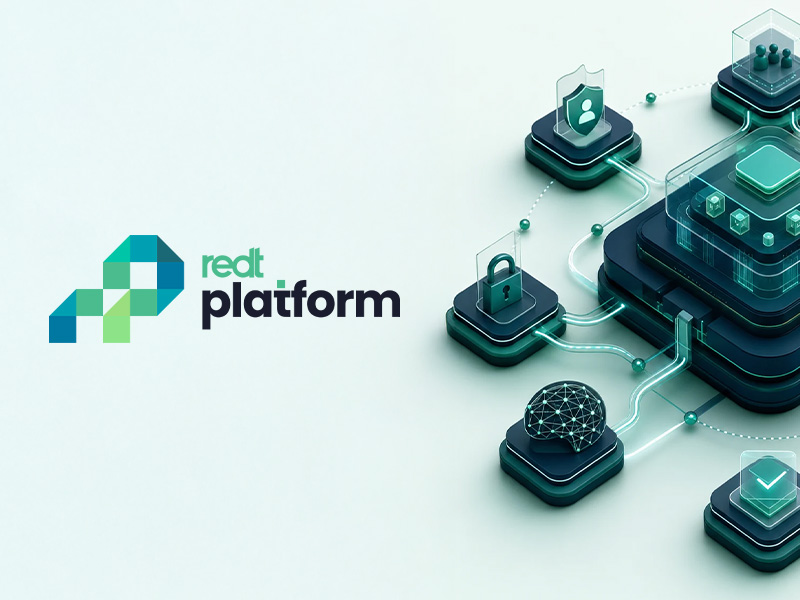
RedT Platform provides the foundation for identity, tenancy, runtime, integrations, auditability and managed AI consumption.
It is not a showcase of internal features. It is the production foundation for operating agents, workflows and intelligent capabilities with enterprise control.
Start by understanding processes, risks, metrics and operational constraints.
RedT assesses where AI can improve quality, continuity and productivity without compromising control.
Decisions consider available data, involved systems, regulatory requirements, customer impact and oversight capacity.
Implementation needs identity, permissions, observability, fallback and audit criteria from the start.
This design reduces ambiguity between technology, operations and compliance.
RedT Platform supports execution so models, agents and systems operate within clear enterprise boundaries.
Delivery does not end when an agent responds; it matures when the workflow is measured and improved.
Operations track exceptions, evidence, quality metrics, user behavior and process adherence.
AI then becomes an evolving enterprise capability rather than an isolated experiment.
In environments with SLAs, risk, privacy rules, continuity needs, sensitive service and multiple systems, scaling without governance increases operational exposure.
RedT AI focuses on scenarios where AI must support real execution, preserve traceability, handle exceptions and sustain continuous improvement.
The RedT AI hub puts this approach into practice, connected to governance and mission-critical operations.
Supervised digital operators for service, analysis, automation and assisted execution.
Foundation for identity, runtime, auditing, integrations and managed model consumption.
Editorial perspectives on governance, compliance, operational value and production in critical environments.
Request an executive assessment of processes, risks, integrations, governance and automation potential in critical operations.